
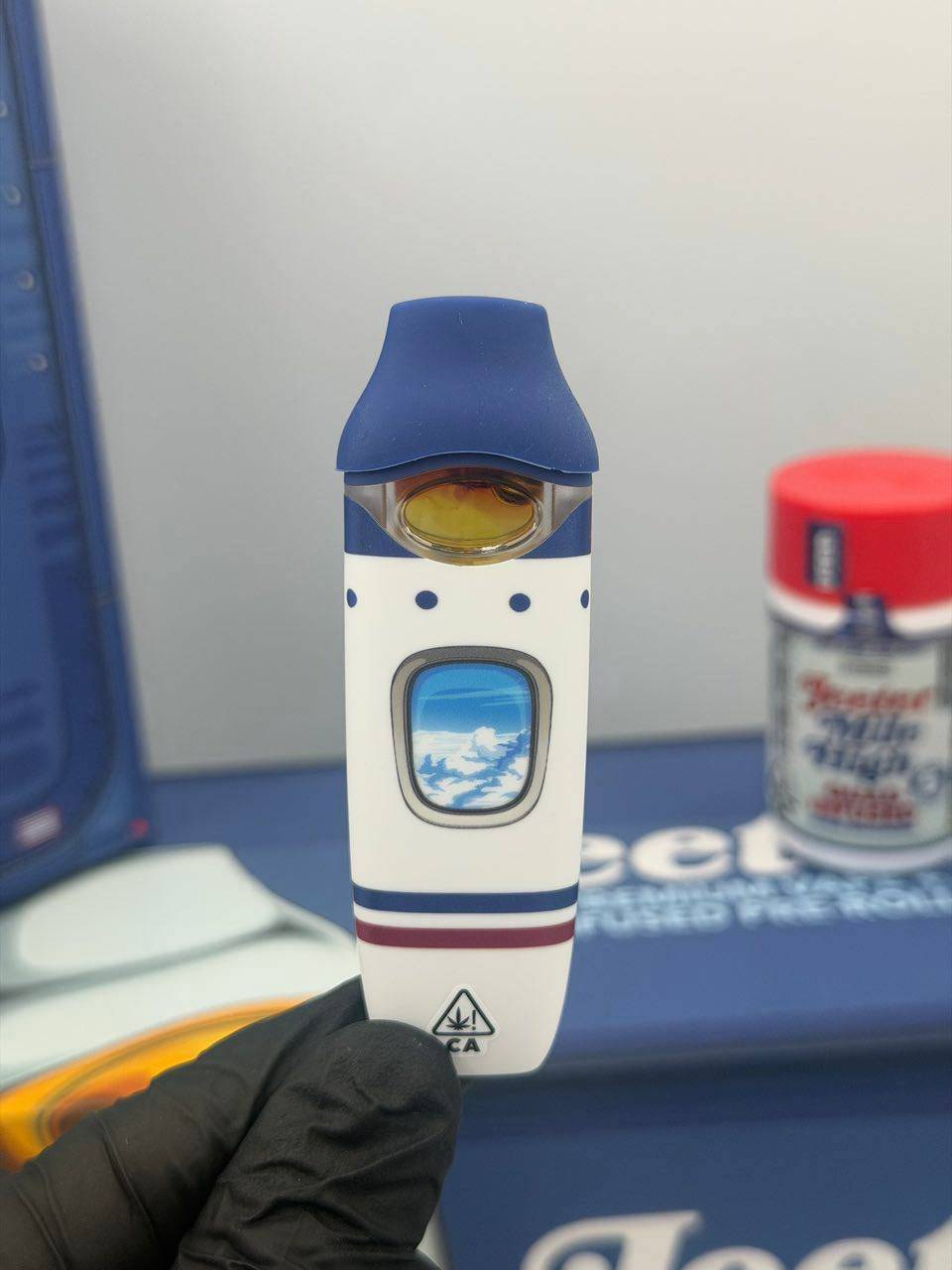
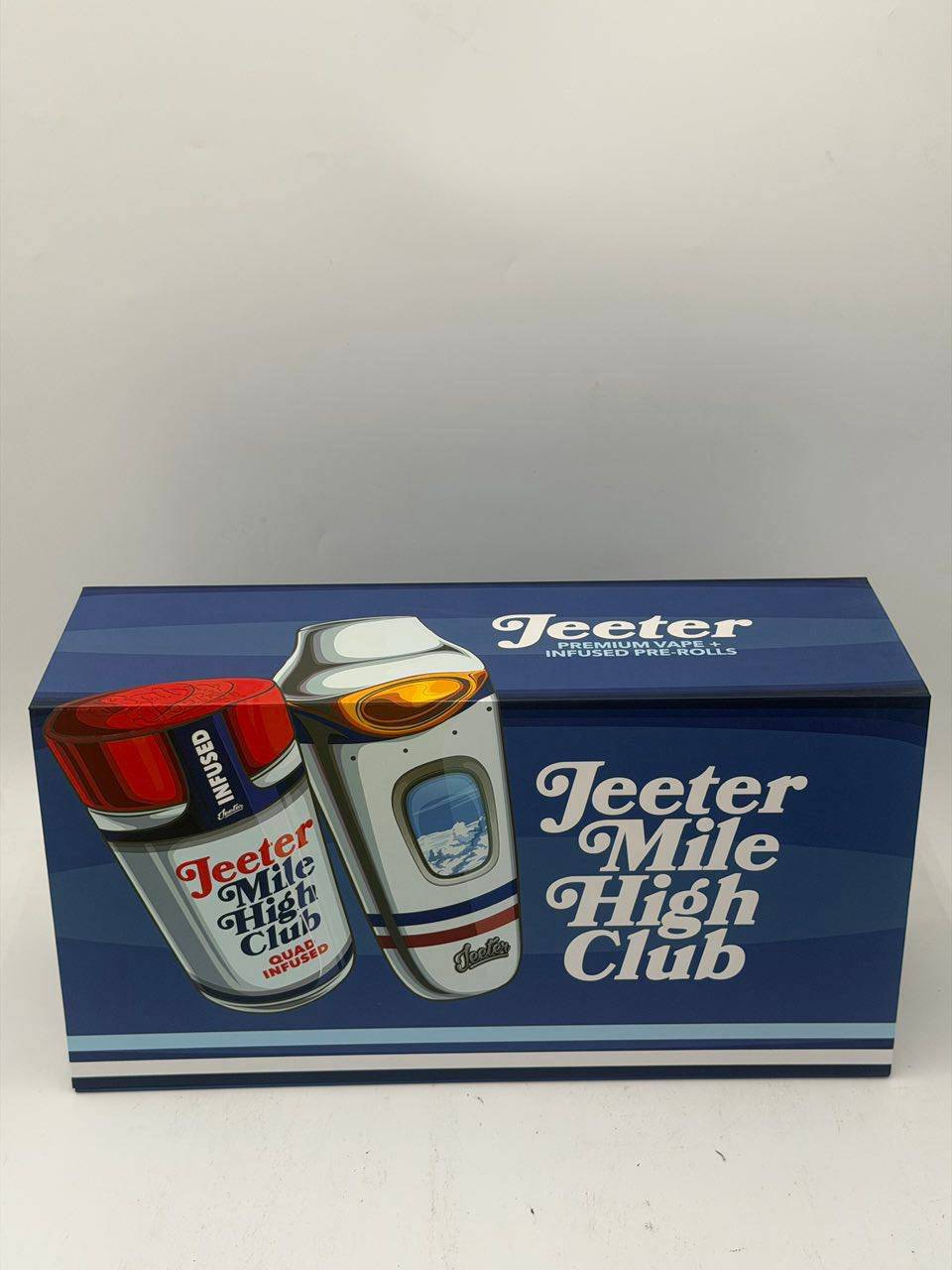
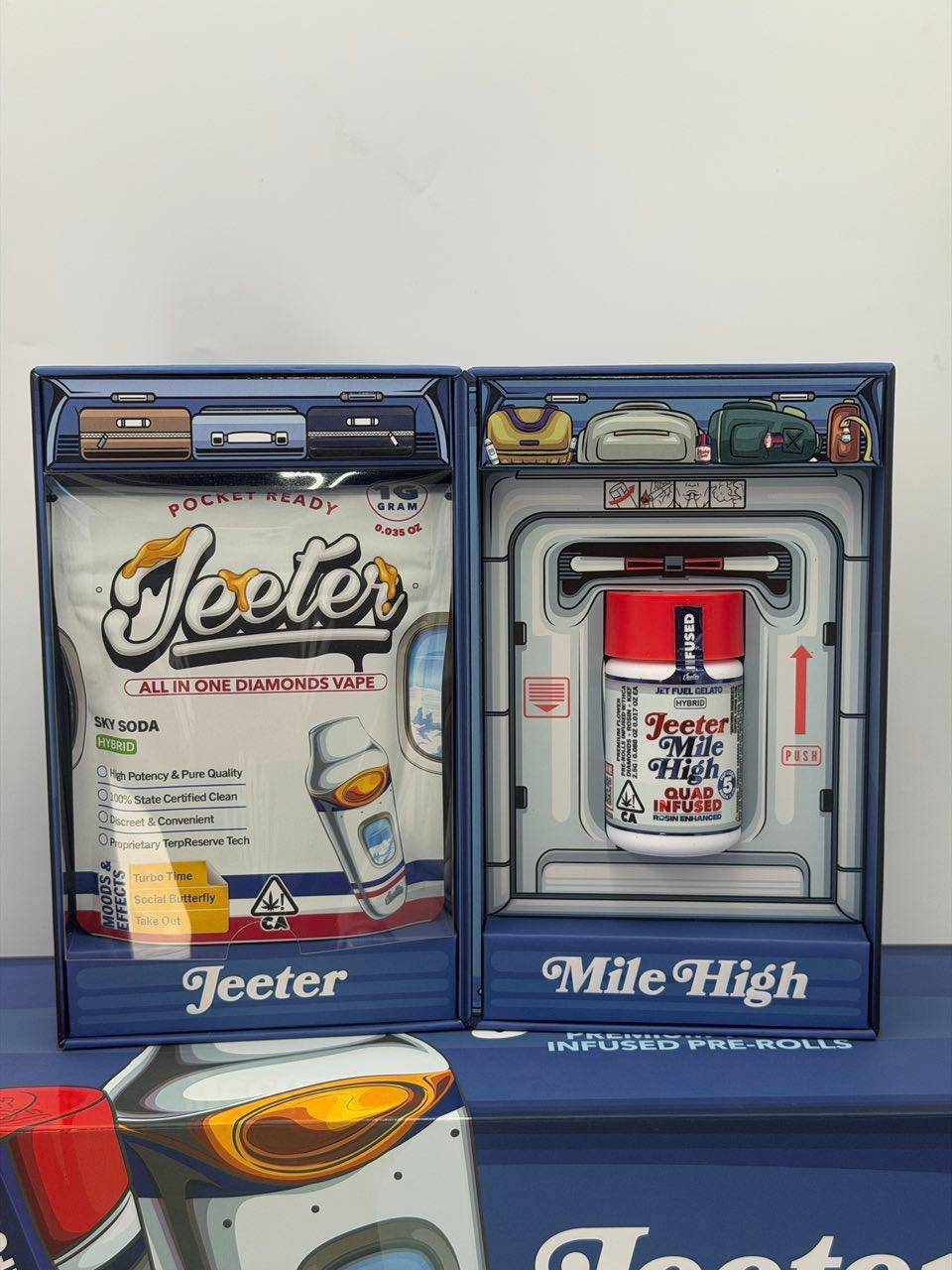
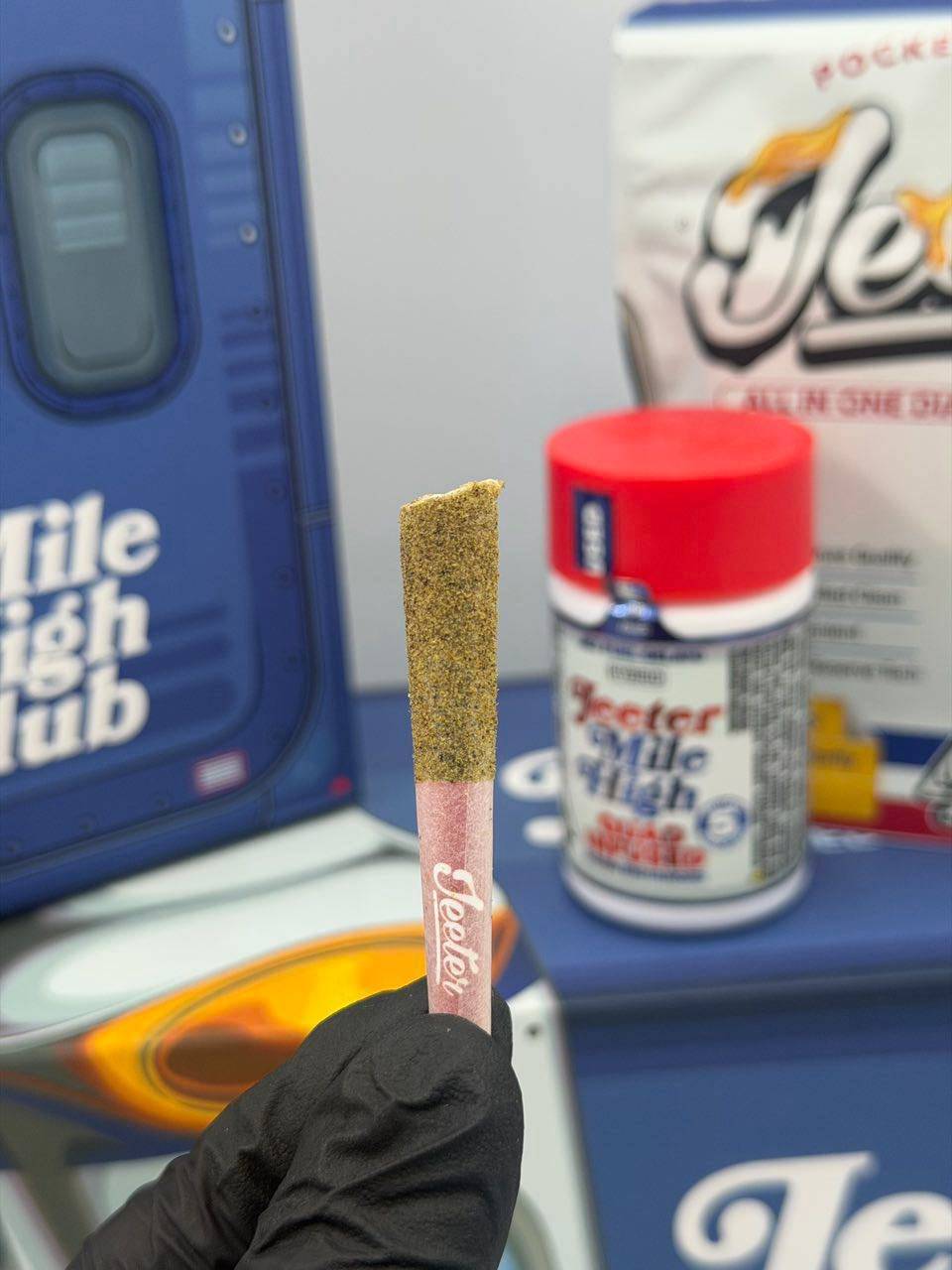
Buy Jeeter Mile High Club Vape + Pre Roll
The Jeeter Mile High Club Vape + Pre Roll is a cannabis product package that combines a vape device with a pre-roll format. This type of bundle is designed to provide consumers with multiple consumption methods within a single package. Depending on the specific release and jurisdiction, product contents, cannabinoid concentrations, strain varieties, and packaging details may vary.
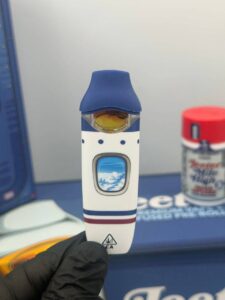
jeeter mile high club vape + pre roll
The vape component typically consists of a pre-filled device containing cannabis extract, while the pre-roll component contains prepared cannabis flower intended for combustion. Manufacturers may offer different strain profiles, flavor characteristics, and cannabinoid formulations across product lines.
Packaging commonly includes product labeling that identifies cannabinoid content, batch information, ingredient disclosures, and regulatory warnings where required by law. Consumers should review all package information carefully before use.
Storage recommendations generally include keeping the product in a cool, dry environment away from direct sunlight and excessive heat. Proper storage may help preserve product quality and maintain intended characteristics over time.
Availability, legal status, and permitted use vary by jurisdiction. Consumers should consult local laws and regulations regarding cannabis possession, purchase, and use.
Product Construction and Components
The combination of a vape device and a pre-roll in a single package reflects a growing trend within the cannabis industry toward multi-format product offerings. Rather than providing only one method of consumption, these bundles allow consumers to access different product formats depending on personal preference, circumstances, and local regulations. Jeeter Mile High Club Vape + Pre Roll Jeeter Mile High Club Vape + Pre Roll Jeeter Mile High Club Vape + Pre Roll
The vape component is generally manufactured using cannabis extracts that have been processed and formulated for vaporization. Depending on the specific product version, the device may be rechargeable or disposable. Extract formulations can vary significantly and may include differing cannabinoid ratios, terpene profiles, and production methods. Consumers should always consult the product label for precise information regarding contents and potency.
The pre-roll component typically contains ground cannabis flower that has been prepared and packaged in a ready-to-use format. Manufacturing processes may vary between producers, but quality-control measures generally focus on consistency, weight accuracy, and product integrity. Packaging is often designed to protect the contents from environmental factors such as moisture, excessive heat, and physical damage during transportation and storage.
Furthermore, manufacturers frequently incorporate tamper-evident seals and child-resistant features where required by law. These packaging elements help support consumer safety and regulatory compliance while also preserving product freshness.
Packaging Design and Presentation
Modern cannabis packaging serves multiple purposes beyond simple product containment. First, it helps protect product quality throughout distribution and storage. Second, it provides consumers with important information regarding ingredients, potency, and legal requirements. Third, it assists retailers with inventory management and product identification.
Many cannabis products utilize durable materials designed to maintain structural integrity under normal handling conditions. In addition, labels commonly include batch numbers, manufacturing dates, expiration recommendations, and testing information. Such details support product traceability and transparency within regulated markets.
Because regulations differ among jurisdictions, packaging requirements can vary substantially. Some regions require extensive warning statements, while others focus more heavily on ingredient disclosure and cannabinoid reporting. As a result, consumers may notice differences in presentation even among products offered by the same manufacturer in different locations.
Moreover, manufacturers frequently update packaging designs to align with evolving regulatory standards and consumer expectations. Therefore, product appearance may change over time without altering the underlying contents.
Understanding Cannabinoids
Cannabinoids are naturally occurring compounds found within the cannabis plant. Scientific research has identified numerous cannabinoids, each possessing unique characteristics and interactions within the body. Among the most commonly discussed cannabinoids are THC and CBD, although many additional compounds continue to be studied.
THC, or tetrahydrocannabinol, is generally recognized as the primary psychoactive cannabinoid found in cannabis. Meanwhile, CBD, or cannabidiol, is often discussed separately due to its distinct properties and lack of intoxicating effects. Various products may contain different concentrations of these and other cannabinoids depending on cultivation practices, extraction methods, and intended formulations.
Additionally, cannabinoid profiles can vary between batches due to natural agricultural factors. Environmental conditions, genetics, cultivation techniques, harvesting practices, and post-harvest processing all contribute to the final composition of cannabis products.
Consequently, consumers seeking detailed cannabinoid information should refer to laboratory testing results whenever available. Independent testing provides a more accurate understanding of cannabinoid content than visual appearance alone.
The Role of Terpenes
Terpenes are aromatic compounds naturally present in cannabis and numerous other plants. These compounds contribute to the distinctive scents and flavors associated with various botanical species. In cannabis, terpenes may produce aromas that are described as citrus-like, earthy, floral, herbal, pine-like, fruity, or spicy.
Researchers continue investigating the relationship between terpenes and cannabinoids. Although scientific understanding continues to evolve, terpene analysis has become an important component of modern cannabis testing and product evaluation.
Commonly identified cannabis terpenes include myrcene, limonene, pinene, linalool, caryophyllene, and humulene. Each terpene possesses a unique aromatic profile that contributes to the overall sensory characteristics of a product.
Furthermore, extraction and processing methods can influence terpene retention. Therefore, products manufactured using different techniques may exhibit varying aromatic qualities even when originating from similar plant material.
Quality Assurance and Laboratory Testing
Quality assurance plays a significant role within regulated cannabis markets. Independent laboratory testing helps verify cannabinoid content, screen for contaminants, and provide consumers with objective product information.
Testing protocols may include analysis for cannabinoids, terpenes, residual solvents, heavy metals, microbial contamination, pesticides, and other parameters depending on applicable regulations. Results are often summarized on product packaging through batch-specific labels or QR codes that direct consumers to detailed reports.
In addition, testing contributes to greater transparency throughout the supply chain. Retailers, regulators, manufacturers, and consumers all benefit from standardized testing practices that support consistency and accountability.
Because laboratory standards differ among jurisdictions, testing requirements may vary. Nevertheless, third-party verification remains one of the most important mechanisms for maintaining product quality and consumer confidence.
Storage and Product Care
Proper storage conditions can help maintain the integrity of cannabis products over time. Environmental factors such as temperature, humidity, light exposure, and oxygen exposure may influence product quality.
For vape devices, storage in moderate temperatures is generally recommended to protect battery performance and preserve extract consistency. Excessive heat may affect device operation, while extreme cold can alter extract viscosity.
Similarly, pre-roll products benefit from storage conditions that minimize exposure to moisture fluctuations and direct sunlight. Appropriate storage may help preserve aroma, appearance, and overall product condition.
Consumers should also keep products in their original packaging whenever possible. Original packaging often provides important safety information, batch identification details, and protective features that assist with product preservation.
Furthermore, all cannabis products should be stored securely and kept out of reach of children and pets. Responsible storage practices remain an essential component of consumer safety.
Consumer Information and Regulatory Considerations
Cannabis laws differ significantly between countries, states, provinces, and municipalities. As a result, product availability, purchase limits, possession allowances, and permitted usage locations may vary substantially.
Consumers should familiarize themselves with local regulations before purchasing, possessing, transporting, or using cannabis products. Compliance with applicable laws helps reduce legal risks and supports responsible participation in regulated markets.
Additionally, age restrictions commonly apply to cannabis products. Retailers typically verify age eligibility before completing transactions in jurisdictions where cannabis sales are permitted.
Travel considerations are equally important. Transporting cannabis across jurisdictional boundaries may be prohibited even when cannabis is legal in both locations. Therefore, consumers should carefully review relevant regulations before traveling with any cannabis-related product.
As the regulatory landscape continues to evolve, staying informed about current requirements remains essential for consumers, businesses, and industry stakeholders alike.
Product Construction and Components
The combination of a vape device and a pre-roll in a single package reflects a growing trend within the cannabis industry toward multi-format product offerings. Rather than providing only one method of consumption, these bundles allow consumers to access different product formats depending on personal preference, circumstances, and local regulations.
The vape component is generally manufactured using cannabis extracts that have been processed and formulated for vaporization. Depending on the specific product version, the device may be rechargeable or disposable. Extract formulations can vary significantly and may include differing cannabinoid ratios, terpene profiles, and production methods. Consumers should always consult the product label for precise information regarding contents and potency.
The pre-roll component typically contains ground cannabis flower that has been prepared and packaged in a ready-to-use format. Manufacturing processes may vary between producers, but quality-control measures generally focus on consistency, weight accuracy, and product integrity. Packaging is often designed to protect the contents from environmental factors such as moisture, excessive heat, and physical damage during transportation and storage.
Furthermore, manufacturers frequently incorporate tamper-evident seals and child-resistant features where required by law. These packaging elements help support consumer safety and regulatory compliance while also preserving product freshness.
Packaging Design and Presentation
Modern cannabis packaging serves multiple purposes beyond simple product containment. First, it helps protect product quality throughout distribution and storage. Second, it provides consumers with important information regarding ingredients, potency, and legal requirements. Third, it assists retailers with inventory management and product identification.
Many cannabis products utilize durable materials designed to maintain structural integrity under normal handling conditions. In addition, labels commonly include batch numbers, manufacturing dates, expiration recommendations, and testing information. Such details support product traceability and transparency within regulated markets.
Because regulations differ among jurisdictions, packaging requirements can vary substantially. Some regions require extensive warning statements, while others focus more heavily on ingredient disclosure and cannabinoid reporting. As a result, consumers may notice differences in presentation even among products offered by the same manufacturer in different locations.
Moreover, manufacturers frequently update packaging designs to align with evolving regulatory standards and consumer expectations. Therefore, product appearance may change over time without altering the underlying contents.
Understanding Cannabinoids
Cannabinoids are naturally occurring compounds found within the cannabis plant. Scientific research has identified numerous cannabinoids, each possessing unique characteristics and interactions within the body. Among the most commonly discussed cannabinoids are THC and CBD, although many additional compounds continue to be studied.
THC, or tetrahydrocannabinol, is generally recognized as the primary psychoactive cannabinoid found in cannabis. Meanwhile, CBD, or cannabidiol, is often discussed separately due to its distinct properties and lack of intoxicating effects. Various products may contain different concentrations of these and other cannabinoids depending on cultivation practices, extraction methods, and intended formulations.
Additionally, cannabinoid profiles can vary between batches due to natural agricultural factors. Environmental conditions, genetics, cultivation techniques, harvesting practices, and post-harvest processing all contribute to the final composition of cannabis products.
Consequently, consumers seeking detailed cannabinoid information should refer to laboratory testing results whenever available. Independent testing provides a more accurate understanding of cannabinoid content than visual appearance alone.
The Role of Terpenes
Terpenes are aromatic compounds naturally present in cannabis and numerous other plants. These compounds contribute to the distinctive scents and flavors associated with various botanical species. In cannabis, terpenes may produce aromas that are described as citrus-like, earthy, floral, herbal, pine-like, fruity, or spicy.
Researchers continue investigating the relationship between terpenes and cannabinoids. Although scientific understanding continues to evolve, terpene analysis has become an important component of modern cannabis testing and product evaluation.
Commonly identified cannabis terpenes include myrcene, limonene, pinene, linalool, caryophyllene, and humulene. Each terpene possesses a unique aromatic profile that contributes to the overall sensory characteristics of a product. Jeeter Mile High Club Vape + Pre Roll Jeeter Mile High Club Vape + Pre Roll Jeeter Mile High Club Vape + Pre Roll
Furthermore, extraction and processing methods can influence terpene retention. Therefore, products manufactured using different techniques may exhibit varying aromatic qualities even when originating from similar plant material.
Quality Assurance and Laboratory Testing
Quality assurance plays a significant role within regulated cannabis markets. Independent laboratory testing helps verify cannabinoid content, screen for contaminants, and provide consumers with objective product information. Jeeter Mile High Club Vape + Pre Roll Jeeter Mile High Club Vape + Pre Roll
Testing protocols may include analysis for cannabinoids, terpenes, residual solvents, heavy metals, microbial contamination, pesticides, and other parameters depending on applicable regulations. Results are often summarized on product packaging through batch-specific labels or QR codes that direct consumers to detailed reports.
In addition, testing contributes to greater transparency throughout the supply chain. Retailers, regulators, manufacturers, and consumers all benefit from standardized testing practices that support consistency and accountability.
Because laboratory standards differ among jurisdictions, testing requirements may vary. Nevertheless, third-party verification remains one of the most important mechanisms for maintaining product quality and consumer confidence.
Storage and Product Care
Proper storage conditions can help maintain the integrity of cannabis products over time. Environmental factors such as temperature, humidity, light exposure, and oxygen exposure may influence product quality.
For vape devices, storage in moderate temperatures is generally recommended to protect battery performance and preserve extract consistency. Excessive heat may affect device operation, while extreme cold can alter extract viscosity.
Similarly, pre-roll products benefit from storage conditions that minimize exposure to moisture fluctuations and direct sunlight. Appropriate storage may help preserve aroma, appearance, and overall product condition.
Consumers should also keep products in their original packaging whenever possible. Original packaging often provides important safety information, batch identification details, and protective features that assist with product preservation.
Furthermore, all cannabis products should be stored securely and kept out of reach of children and pets. Responsible storage practices remain an essential component of consumer safety.
Consumer Information and Regulatory Considerations
Cannabis laws differ significantly between countries, states, provinces, and municipalities. As a result, product availability, purchase limits, possession allowances, and permitted usage locations may vary substantially. Jeeter Mile High Club Vape + Pre Roll Jeeter Mile High Club Vape + Pre Roll
Consumers should familiarize themselves with local regulations before purchasing, possessing, transporting, or using cannabis products. Compliance with applicable laws helps reduce legal risks and supports responsible participation in regulated markets.
Additionally, age restrictions commonly apply to cannabis products. Retailers typically verify age eligibility before completing transactions in jurisdictions where cannabis sales are permitted.
Travel considerations are equally important. Transporting cannabis across jurisdictional boundaries may be prohibited even when cannabis is legal in both locations. Therefore, consumers should carefully review relevant regulations before traveling with any cannabis-related product.
As the regulatory landscape continues to evolve, staying informed about current requirements remains essential for consumers, businesses, and industry stakeholders alike.
Manufacturing Processes and Production Standards
The production of cannabis products involves multiple stages, beginning with cultivation and continuing through harvesting, processing, testing, packaging, and distribution. Each stage contributes to the final characteristics of the product and may influence consistency, quality, and compliance with regulatory requirements. Jeeter Mile High Club Vape + Pre Roll Jeeter Mile High Club Vape + Pre Roll Jeeter Mile High Club Vape + Pre Roll
Cultivation practices vary among producers and may include indoor, outdoor, or greenhouse environments. Indoor cultivation offers greater control over environmental conditions such as temperature, humidity, lighting, and airflow. Outdoor cultivation relies more heavily on natural conditions, while greenhouse operations combine aspects of both approaches. Each cultivation method presents unique advantages and challenges that may affect the resulting plant material.
Following harvest, cannabis plants undergo drying and curing processes designed to reduce moisture content and stabilize the material. Proper curing practices are considered important because they may influence aroma preservation, storage stability, and overall product quality. Once curing is complete, plant material may be prepared for various product categories, including flower products, extracts, concentrates, and infused items. Jeeter Mile High Club Vape + Pre Roll Jeeter Mile High Club Vape + Pre Roll
For vape products, extraction processes are commonly used to separate cannabinoids and terpenes from plant material. Depending on the manufacturer and applicable regulations, different extraction methods may be employed. These methods are typically followed by purification, formulation, and testing procedures intended to ensure product consistency and compliance.
Throughout production, manufacturers often implement quality management systems to monitor processes and document compliance activities. These systems help support traceability while also providing a framework for addressing quality concerns if they arise.
Consumer Trends Within the Cannabis Industry
The cannabis industry has experienced significant development over the past decade. As regulatory frameworks have expanded in certain jurisdictions, product diversity has increased considerably. Consumers now encounter a wide range of product formats that extend beyond traditional flower products.
One notable trend involves the growing popularity of multi-format packages. These offerings combine different product types within a single package, allowing consumers to access multiple consumption methods. Such packages may appeal to individuals seeking variety or convenience, although preferences differ considerably among consumers.
Additionally, technological innovation has influenced product development across the industry. Advancements in extraction techniques, laboratory testing, packaging design, and manufacturing processes have contributed to broader product selection and increased transparency.
Consumer interest in detailed product information has also grown. Many individuals now review cannabinoid content, terpene profiles, testing results, and cultivation information before making purchasing decisions. As a result, educational resources and product disclosures have become increasingly important within regulated markets.
Furthermore, sustainability initiatives have received greater attention. Some companies have explored environmentally conscious packaging materials, energy-efficient cultivation methods, and waste-reduction strategies aimed at minimizing environmental impact.
Product Labeling and Transparency
Accurate labeling serves an important role in helping consumers understand product contents and characteristics. Regulatory agencies often establish specific labeling requirements designed to promote transparency and consumer awareness.
Labels commonly include cannabinoid concentrations, ingredient information, package weight, production details, and required warning statements. Some jurisdictions additionally require information regarding serving sizes, testing verification, storage recommendations, and manufacturing facilities.
Moreover, digital tools have enhanced access to product information. QR codes and batch-tracking systems may allow consumers to review laboratory reports and production data directly from mobile devices. This approach supports greater transparency while helping manufacturers communicate detailed information efficiently.
Clear labeling also assists retailers and regulators by simplifying product identification and inventory management. Consequently, comprehensive labeling practices benefit multiple participants throughout the cannabis supply chain.
As regulations evolve, labeling requirements continue to change. Manufacturers must therefore remain attentive to regulatory updates and compliance obligations within each market they serve.
Differences Between Product Formats
Cannabis products are available in numerous formats, each designed to accommodate different consumer preferences and regulatory environments. Common categories include flower products, pre-rolls, concentrates, vape products, edibles, tinctures, topicals, capsules, and beverages.
Flower products generally consist of dried cannabis plant material prepared for consumer use. Pre-rolls utilize ground flower that has been packaged in a ready-to-use format. Concentrates involve processed extracts that may contain higher cannabinoid concentrations than raw flower material.
Vape products typically combine cannabis extracts with hardware designed to produce vapor through controlled heating. Device configurations may differ depending on manufacturer specifications and intended use. Jeeter Mile High Club Vape + Pre Roll Jeeter Mile High Club Vape + Pre RollJeeter Mile High Club Vape + Pre Roll
Edible products incorporate cannabis-derived ingredients into food or beverage formats. These products are subject to additional regulatory requirements in many jurisdictions due to their unique characteristics and packaging considerations.
Because each category possesses distinct attributes, consumers often review product information carefully to determine which format aligns with their preferences and local legal requirements.
Industry Regulation and Compliance
Regulation remains one of the most significant factors influencing cannabis markets worldwide. Governments establish rules governing cultivation, manufacturing, testing, packaging, transportation, retail operations, and consumer access.
Licensing systems are commonly used to oversee commercial activities. Businesses may be required to obtain separate licenses for cultivation, processing, distribution, laboratory testing, and retail sales. Regulatory agencies often conduct inspections and compliance reviews to verify adherence to established standards.
In addition, seed-to-sale tracking systems have become increasingly common within regulated markets. These systems monitor products throughout the supply chain, supporting accountability and traceability from cultivation through final sale.
Testing requirements also represent a major component of regulatory frameworks. Mandatory laboratory analysis helps identify contaminants and verify product information before products reach consumers.
Furthermore, advertising restrictions frequently apply to cannabis businesses. Regulations may limit promotional activities, packaging designs, sponsorship arrangements, and marketing practices in order to address public health and consumer protection concerns.
Responsible Consumption Information
Consumers should always review product labels and follow applicable regulations regarding cannabis use. Product characteristics can vary significantly based on formulation, cannabinoid content, terpene composition, and manufacturing .
Individuals considering cannabis products should educate themselves using reliable information sources and consult qualified professionals when appropriate. Understanding product details contributes to informed decision-making and responsible use.
Additionally, cannabis products should never be shared with minors. Age restrictions exist in regulated markets to help ensure compliance with public health objectives and legal requirements.
Consumers should also remain aware of workplace policies, transportation regulations, and local laws that may affect cannabis possession or use. Legal status and permitted activities differ widely among jurisdictions.
By remaining informed and following applicable regulations, consumers can better navigate an industry that continues to evolve through ongoing research, regulatory development, and market innovation.
Conclusion
The Jeeter Mile High Club Vape + Pre Roll represents a multi-format cannabis package that combines a vape device with a pre-roll product. As with many cannabis offerings, specific characteristics may vary depending on formulation, production batch, regulatory requirements, and market availability.
Understanding product components, manufacturing practices, laboratory testing procedures, labeling standards, storage recommendations, and regulatory considerations can help consumers make informed decisions. Furthermore, ongoing developments in cultivation technology, extraction methods, testing capabilities, and regulatory frameworks continue to shape the modern cannabis industry.
As cannabis markets mature, transparency, quality assurance, consumer education, and regulatory compliance remain central themes across the industry. Consequently, informed consumers are encouraged to review product information carefully, consult local regulations, and remain aware of evolving industry standards whenever evaluating cannabis-related products.
Reviews
There are no reviews yet.